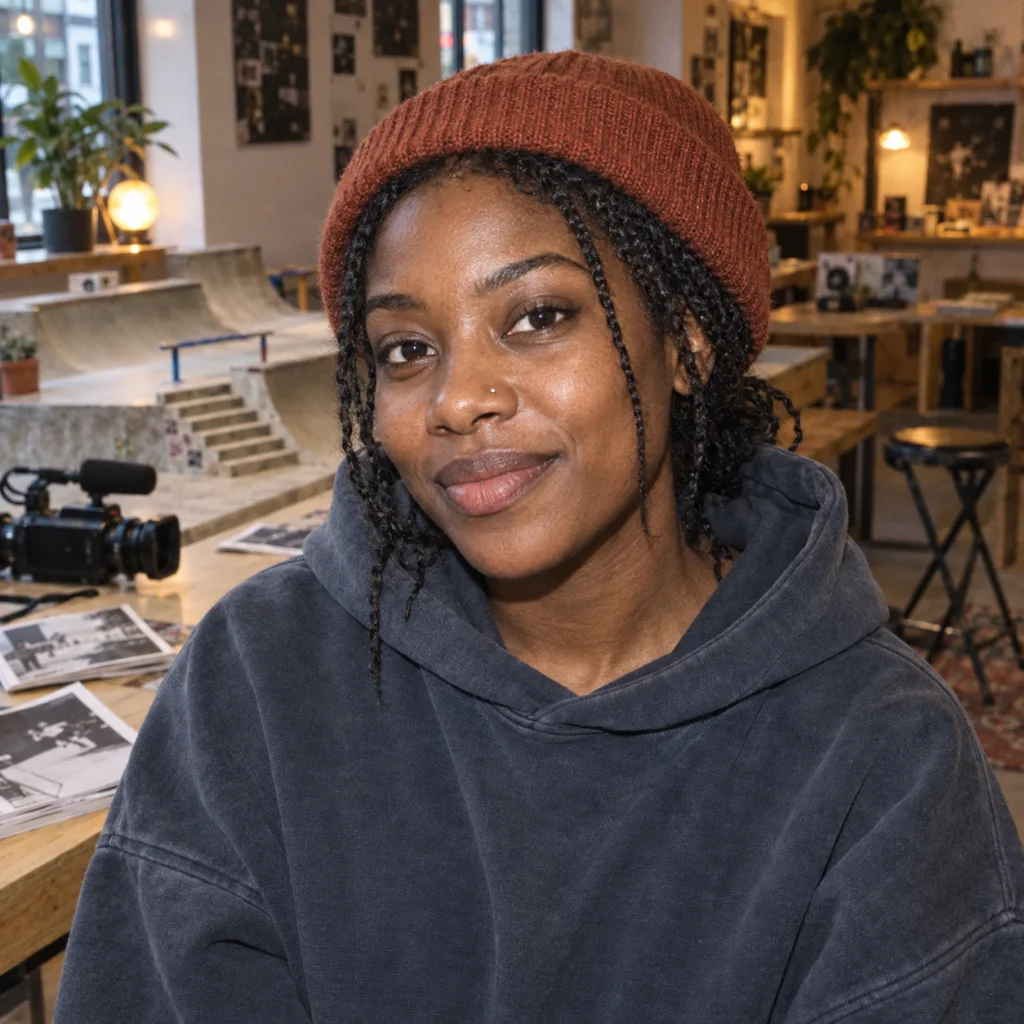
B-roll is any footage that isn't the main action: in our world, anything that isn't a trick. Fingerboarding gives it extra weight. A tight shot of two fingers on a 32 mm deck tells a viewer almost nothing about where they are. A table in a bedroom, a park bolted together in a garage, a ledge set up on a shop counter: those are places, and places are what make an edit feel personal.
That's the territory the episode is pointing at. Here are some fingerboard-specific cutaways worth trying alongside whatever method the lesson teaches:
The setup
- Obstacles coming out of a bag or box and going down on the table
- Waxing a ledge or rail before the first try
- Swapping wheels, tightening trucks or re-taping a deck
The surface
- A slow pass along metal coping or angle iron
- Close-ups of foam or riptape texture
- A board resting at the top of a ramp's transition
The room
- A wide of the whole park so viewers can read the scale
- Friends watching, filming or waiting their turn
- Whatever makes the spot yours: the shelf of decks, the window light, the sticker wall
None of this needs to be long. A second or two between lines is often enough to reset a viewer's eye and give the next trick some breathing room.